
Cultural guide · Revista Latina NC
What is the
Day of the Dead?
The Mexican tradition that, far from fear, celebrates life and welcomes back the loved ones who have passed. A clear guide to understanding it and honoring it with respect.
A celebration of reunion
The Day of the Dead is a Mexican celebration in which families welcome back, every November 1 and 2, the souls of their loved ones who have died. They are believed to return to the world of the living to reunite with those who remember them.
That is why it is not a sad or fearful date: it is a celebration full of color, flowers, food, music, and memory. Instead of hiding death, this tradition looks it in the eye, with affection and even humor, as a natural part of life.
It was born from the encounter between Mexico’s Indigenous cultures and Catholicism, and in 2008 UNESCO recognized it as Intangible Cultural Heritage of Humanity.
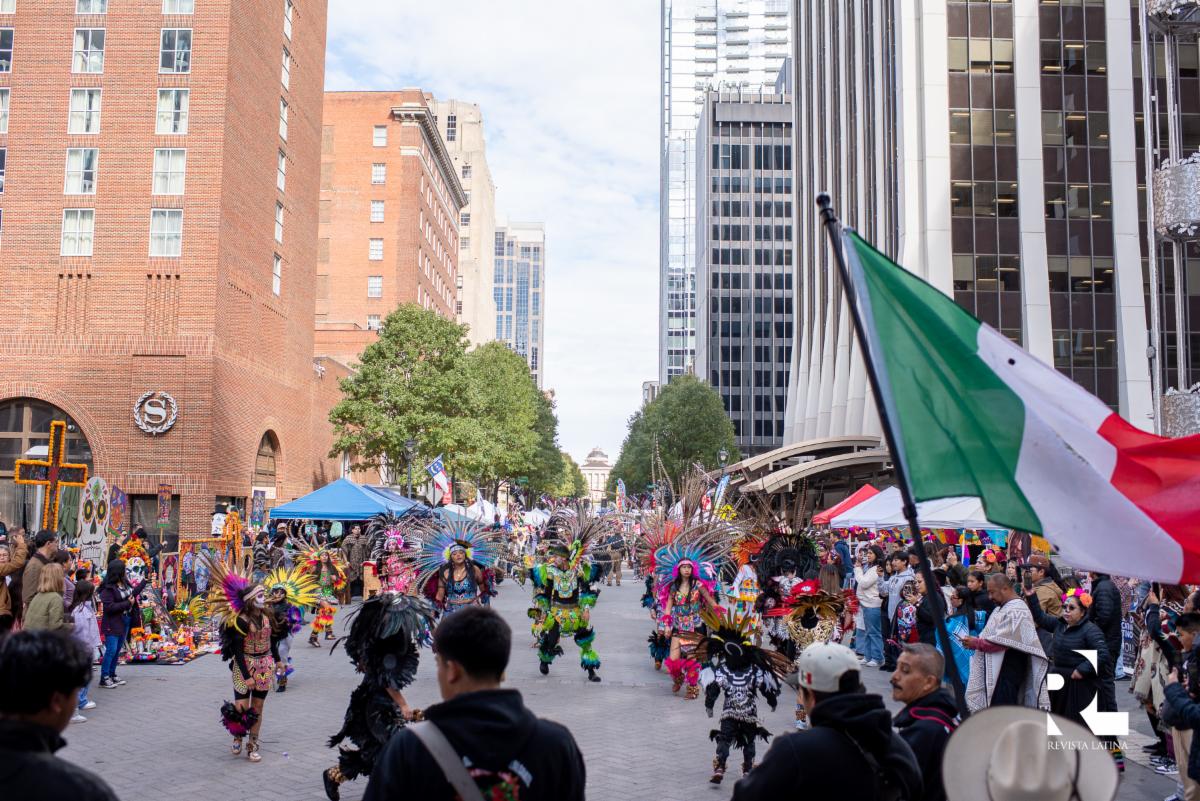
Day of the Dead with Revista Latina, Downtown Raleigh.
The days of the dead
The eve
Families finish the ofrenda and decorate the graves. The wait begins: the souls are about to arrive.
Day of the Little Angels
The souls of children return. They are welcomed with toys, sweets, and white flowers — a tender, luminous welcome.
Day of the Dead
The souls of adults return. The community celebrates in cemeteries and plazas with music, food, and memory: joy, not mourning.
The ofrenda, element by element
The ofrenda is the altar that guides the souls back home. Nothing is there by chance: each object has a meaning.
Portrait
The photo of the person we remember presides over the altar — it is to them the ofrenda is dedicated.
Marigolds (cempasúchil)
Their color and scent guide the souls; the petals trace the path back home.
Candles
Each flame is a light that guides a soul back. They represent faith and hope.
Water
To quench the thirst of the soul after its long journey from the afterlife.
Salt
A symbol of purification that keeps the body incorrupt for its round trip.
Pan de muerto
A sweet, round bread shaped with bones: the cycle of life and death, shared with family.
Copal
Pre-Hispanic incense whose smoke purifies the altar and lifts prayers to the beyond.
Sugar skulls
Sweets bearing the name of the departed — death made close, familiar, and even sweet.
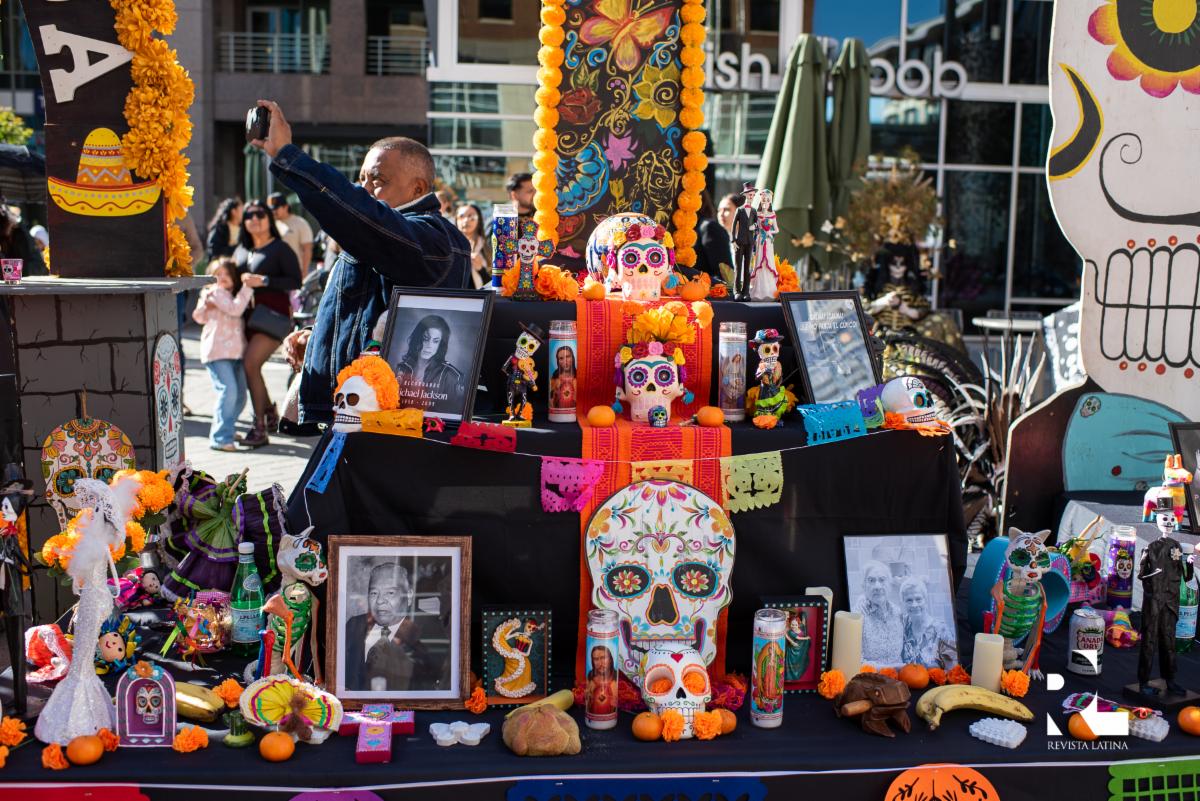
A real ofrenda at the Day of the Dead Festival in Downtown Raleigh. Many ofrendas are built in levels: two represent heaven and earth; three add the underworld; and seven-step altars mark the steps a soul takes to reach its rest.
The symbols you’ll see everywhere
Cempasúchil
The "flower of the dead." Its color and scent guide the souls; its petals mark the way home.
La Catrina
The elegant skeleton by José Guadalupe Posada (1910s), immortalized by Diego Rivera. Before death, we are all equal.
Sugar skulls
Sweets with the name of the departed on the forehead. Death becomes close and even sweet, never frightening.
Papel picado
Perforated tissue paper representing the wind. Its movement signals that the souls are present.
Pan de muerto
Sweet, round bread shaped with bones: the cycle of life and death, shared in family.
Monarch butterfly
It arrives in Mexico on these very dates. Tradition sees in it the souls of those who return.
Alebrijes
Fantastical, brightly colored creatures — guardians and guides of the spirit world.
Copal
Pre-Hispanic incense whose smoke purifies the altar and lifts prayers to the afterlife.
Where this tradition comes from
- Before the Conquest
Mictecacíhuatl and Mictlán
Mesoamerican peoples honored their dead with offerings of water and food for the journey to Mictlán, the underworld ruled by Mictecacíhuatl, Lady of the Dead.
- 16th century
The mestizaje
With the arrival of Catholicism, Indigenous rites merged with All Saints’ and All Souls’ Days, fixing the celebration on November 1 and 2.
- 20th century
La Catrina is born
Engraver José Guadalupe Posada creates the "Calavera Garbancera"; Diego Rivera dresses her in finery in his 1947 mural and turns her into the face of the Day of the Dead.
- 2008
World Heritage
UNESCO inscribes the Indigenous festivities dedicated to the dead as Intangible Cultural Heritage of Humanity.
- Today · North Carolina
A living tradition
From Mexico to the Triangle: every fall, thousands of families celebrate the Day of the Dead with Revista Latina in Downtown Raleigh, passing it to new generations.
No, it’s not "Mexican Halloween"
🎃 Halloween
- Celtic root (the festival of Samhain).
- Seeks to ward off and scare spirits.
- Horror costumes, trick-or-treat, carved pumpkins.
- The tone is fear and fright.
💀 Day of the Dead
- Mesoamerican root over 3,000 years old.
- Welcomes and honors the souls with hospitality.
- Ofrendas, marigolds, pan de muerto, Catrinas.
- The tone is joy, love, and memory.
How to take part with respect
You don’t have to be Mexican to join: the tradition is shared with pride. Appreciating a culture is not appropriating it — the difference is respect and knowing the why.
Learn the "why" of each tradition before taking part: the meaning is in memory and love, not in a costume.
Build an ofrenda for your own loved ones, with their photos, favorite food, flowers, and candles.
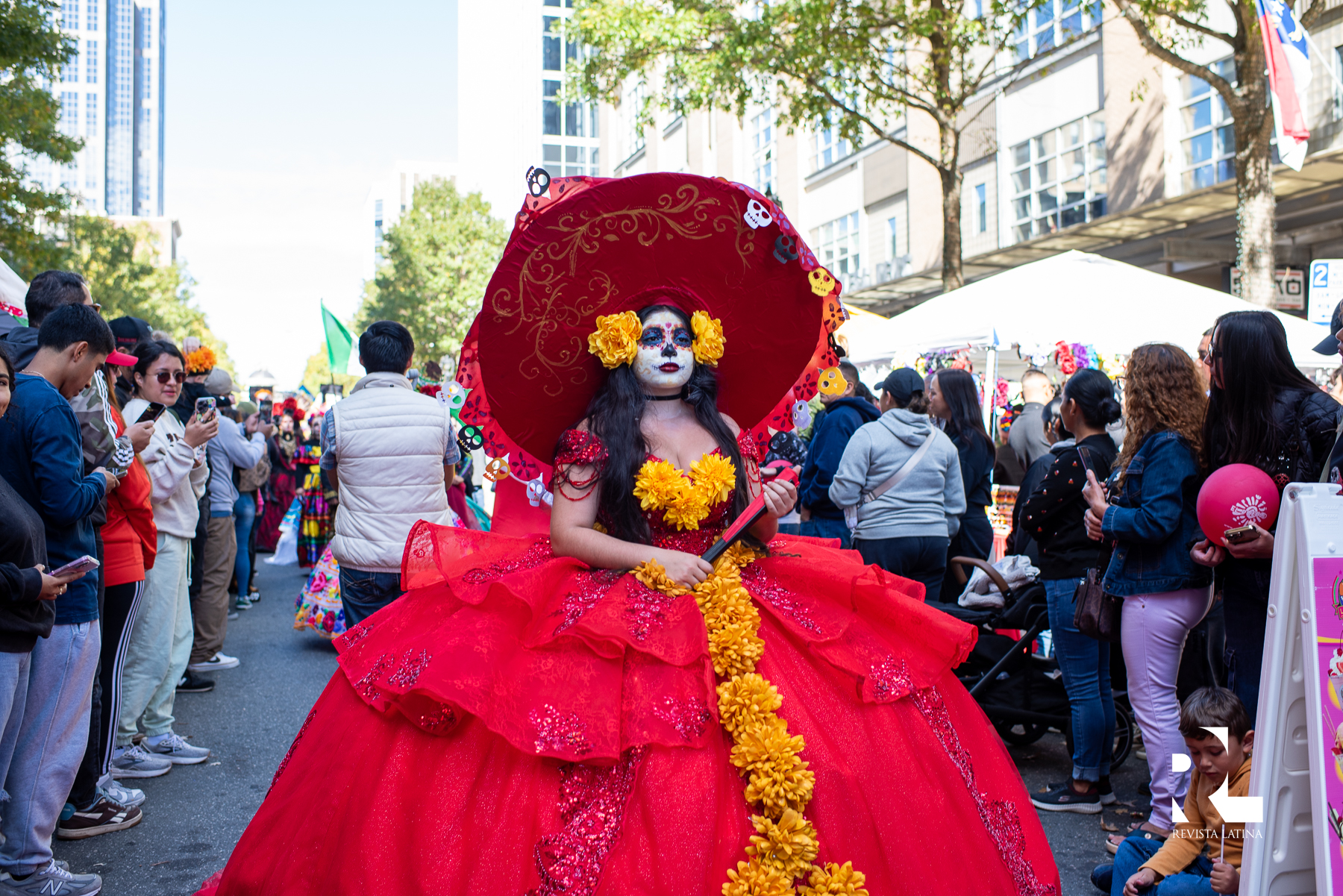
If you paint your face as a Catrina, do it with intention and respect — bright colors and traditional motifs, not Halloween "horror."
Support Latino artists, cooks, and businesses: buy the pan de muerto and crafts from the community.
Do not treat it as a costume party or use offensive stereotypes or imagery.
Do not confuse it with Halloween: there is no "trick or treat," carved pumpkins, or intent to scare.
The flavors of the Day of the Dead
Food is a way to share with those who returned. These are some of the flavors that are never missing.
What people ask most
Is Día de los Muertos the same as Halloween?
No. Halloween comes from the Celtic festival of Samhain and seeks to ward off spirits; the Day of the Dead has Mesoamerican roots more than 3,000 years old and does the opposite: it welcomes the souls of loved ones with joy, food, and music. It is not a night of fear, but a celebration of life and memory.
Which days is it celebrated and what does each mean?
It is celebrated on November 1 and 2. November 1 is the Day of the Little Angels, for the souls of children; November 2 is the Day of the Dead, for adults. The eve, October 31, is when the ofrenda is prepared and graves are decorated.
What is an ofrenda?
It is the altar families build at home or at the cemetery to welcome their dead. It gathers the loved one’s photo, their favorite dishes and objects, marigolds, candles, water, salt, pan de muerto, and sugar skulls. Each element helps guide the soul back and lets it enjoy again what it loved in life.
Why is it a joyful celebration and not a sad one?
Because in this tradition death is not an end or something to fear, but part of the cycle of life and a chance for reunion. Remembering those who left with their songs, food, and stories keeps them alive among us.
Can I celebrate the Day of the Dead if I am not Mexican?
Yes. The tradition is shared with pride and hospitality. The key is to take part with respect: learn its meaning, honor your own loved ones, and avoid stereotypes. Appreciating a culture is not appropriating it — approach it with genuine interest.
Who is La Catrina?
She is the elegant skeleton created by engraver José Guadalupe Posada in the early 20th century as social critique — "death is democratic" — and popularized by muralist Diego Rivera. Today she is the most recognizable face of the Day of the Dead, a reminder that before death, all people are equal.
Experience the Day of the Dead in North Carolina
Every fall, Downtown Raleigh fills with color, dance, and memory at the Day of the Dead festival with Revista Latina. The best way to understand this tradition is to live it.
Questions or want to collaborate? Email us at info@revistalatinanc.com